

[ad_1]
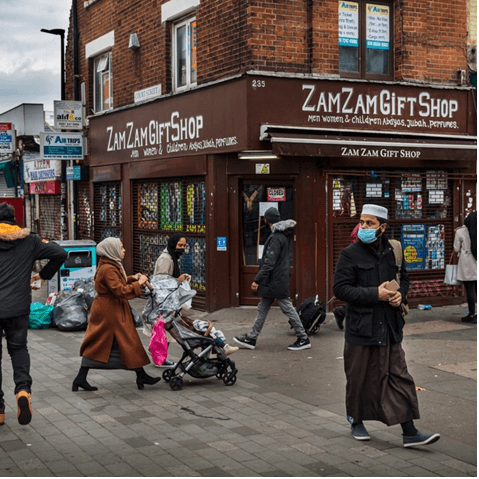
South Asians (SA) comprise roughly 7.5% of the UK inhabitants (Nash, 2019). Research point out that South Asians within the UK not often search psychological well being companies. (Prajapati & Liebling, 2021). Many of the research have been carried out amongst SA girls or the final SA inhabitants quite than focussed on particular ethnic teams (Hussain & Cochrane, 2004; Neale et al., 2009; Prajapati & Liebling, 2021).
Though it was discovered that males are much less inclined to hunt assist for any psychological well being issues (Oliver et al., 2005); findings from a scoping overview recommend that though most community-based interventions goal the South Asian inhabitants, interventions are absent particularly for males (Baskin et al., 2021).
Proof reveals that British Bangladeshis face important disadvantages; dwelling in council housing and expertise larger charges of workless households with dependent youngsters and poor well being (Ali, 2006; Darko, 2021; Giant & Ghosh, 2006). Together with socio-economic challenges, the normal notions of masculinity throughout the Bangladeshi neighborhood discourage males from counting on feminine members of the family and emphasise their position as suppliers; placing them underneath a number of psychological toll (Willott & Griffin, 1996). They’re thought of a “hard-to-reach” inhabitants who underuse psychological well being companies in comparison with white males (Darko, 2021), but analysis relating to their notion of psychological well being and help companies is sparse.
This weblog summarises a latest qualitative examine by Dr Shah Alam, a British Bangladeshi Male Medical Psychologist (2023) exploring the perceptions of British Bangladeshi males relating to boundaries to psychological well being help.
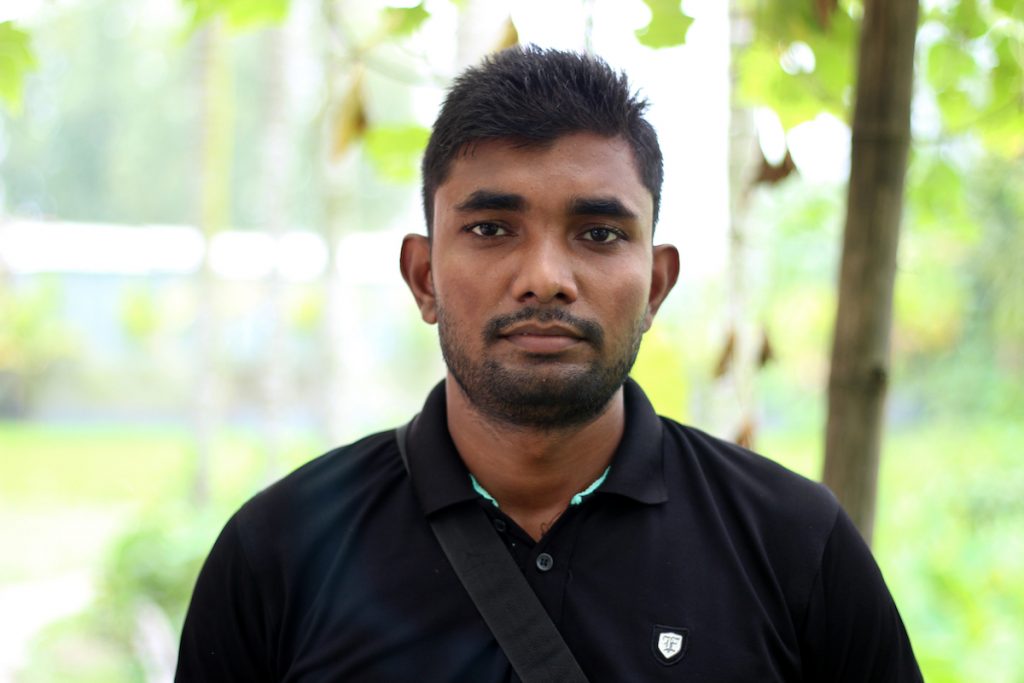
British Bangladeshi communities are discovered to underuse psychological well being companies within the UK.
Strategies
The writer gathered private accounts by means of qualitative interviews. All contributors have been British-Bangladeshi males aged 22-59, scoring reasonable to extreme on the Affected person Well being Questionnaire-9 (PHQ-9) and the Normal Anxiousness Dysfunction-7 (GAD-7). The examine excluded individuals who have been thought of ‘excessive in danger’, have been currenty utilizing or lately acquired help from psychological well being companies. 54 contributors have been recruited utilizing on-line social media and leaflet drops and screened for melancholy and anxiousness ranges utilizing PHQ-9 or GAD-7 questionnaires through Qualtrics. The qualitative information was analysed following the framework of reflexive thematic evaluation. Knowledge saturation was reached with 12 contributors.
Outcomes
Reflexive thematic evaluation yielded the next primary themes:
Totally different understanding of psychological misery
The contributors highlighted that there’s lack of know-how of psychological well being evidenced by prioritising bodily well being equivalent to diabetes, attributing any psychological well being signs to bodily well being. Cultural norms throughout the Bangladeshi neighborhood discouraged open discussions about feelings, with people typically being reassured that they’re okay even when experiencing misery. Language boundaries have been additionally recognized as hindering them from expressing freely. Members generally attributed psychological misery to spirits or black magic, and described the widespread beliefs a few of lack of psychological well being help companies, which might result in people not approaching companies.
Culturally we don’t discuss our emotions and simply categorical dominance and this concept that “I’m okay”.
Conventional cultural expectations
The contributors believed that sturdy gender norms exist of their neighborhood. Males are anticipated to be the only real breadwinner of the household taking on all of the monetary duty; compelled to supress one’s feelings in order to satisfy the societal expectations to be masculine beliefs.
Even with my dad, as a child, I might cry and he would say “don’t try this”, “don’t be a woman” and for guys it’s extra like “buckle up”’.
Concern and loss
Members expressed that affected by psychological well being issues meant to endure from self-stigma, disgrace and dropping respect. This led to elevated worry for sharing and reaching out for skilled assist.
We are inclined to hold it saved inside ourselves till it bursts or one thing large occurs, after which it’s too late.
Coping assets
This theme delves into how the contributors imagine that following one’s faith and its practices helped to take care of one’s psychological well being. Regardless of going through self-stigma and reluctance to hunt help, contributors indicated feeling snug sharing their feelings with their companions, creating a way of security and help.
individuals discover solace and luxury in faith, so that they pray, and I can’t disagree with that however on the identical time you’ve got to have a look at the sensible means as properly.
Boundaries to entry
This theme factors out the important thing boundaries to utilising psychological well being help companies. Members described inadequate consciousness and understanding relating to accessible psychological well being help companies, difficulties in communication with healthcare professionals owing to language boundaries, detrimental expertise with GP when in search of assist, and lack of belief in skilled healthcare employees.
There aren’t any interpreters both and I might attempt to clarify myself the very best I can…So, generally we don’t perceive, and we will battle. The language barrier has a huge impact on me.
Neighborhood outreach and collaboration
Members burdened the significance of collaborative efforts between psychological well being companies and the neighborhood to reinforce entry to help and forestall psychological well being disaster. Members highlighted the importance of involving individuals with lived expertise, integrating well being training with non secular teachings.
How you can flip to faith to assist with the stress you’re going by means of… You see a number of males at mosque, that’s the finest time to inform them.
This examine means that having religion in a single’s faith and tradition may also help British Bangladeshi males address psychological misery.
Conclusions
This examine sheds gentle on the complexities surrounding psychological well being, stigma, and help-seeking behaviours throughout the British Bangladeshi male neighborhood.
It reveals a number of components influencing formal help-seeking, together with:
- consciousness about accessible help companies,
- the necessity to tackle language boundaries,
- the necessity to normalise expressing feelings, and
- the significance of constructing belief among the many skilled well being care companies.

British Bangladeshi males face self- and neighborhood stigma surrounding psychological well being negatively impacting help-seeking behaviours.
Strengths and limitations
One of many primary strengths of this examine is that it employed numerous strategies to take care of qualitative rigour, equivalent to reflexive thematic evaluation, member-checking, moral concerns, and a misery protocol. One other energy is the researcher’s fluency in Bengali and Sylheti, which helped to make sure correct translation and interpretation, enhancing the reliability of the findings. In contrast to previous research, which focussed on the general South Asian inhabitants and South Asian girls, it’s fairly a novel examine unravelling the wants of British Bangladeshi males’s perceived psychological well being.
One limitation is that the examine relied closely on social media for recruitment, doubtlessly excluding people with out web entry or these from decrease socio-economic backgrounds, which limits the illustration of Bangladeshi males residing in London. The writer acknowledged the adoption of information saturation, however solely 12 contributors have been deemed eligible whereas recruiting, elevating questions on whether or not they regarded for information saturation or pre-determined the pattern dimension based mostly on literature suggesting 12 contributors are ample. Furthermore, though the writer acknowledged that the examine used a co-production strategy, there was no proof of this or additional clarification on how this was executed.
One other limitation is the exclusion of the individuals who have lately used the NHS companies for his or her psychological well being points as there might need been males who had discontinued their remedy after experiencing particular boundaries, which could possibly be instrumental for this examine. The lived expertise of such Bangladeshi males might present priceless insights. Moreover, this examine didn’t discover one of many key studying goals associated to low and high-intensity CBT practitioners. Consequence measures have been gathered to reinforce sturdy information evaluation, subsequently, the dialogue could possibly be enhanced with cross-examination of the literature alongside the findings of the psychological well being of British Bangladeshi males.

Specializing in British Bangladeshi male psychological well being is a number one energy of this examine.
Implications for observe
The findings suggest that there’s an pressing want to boost psychological well being consciousness within the British Bangladeshi Muslim communities. This may be achieved by organising such programmes in elements of UK the place Bangladeshi neighborhood residents are populous. As an example, psychological well being professionals and organisations can promote consciousness throughout particular festivities like Eid, help management and facilitation by non secular leaders and construct native networks for males.
The examine findings recommend that males could confide their feelings to their wives, therefore, females is also included in numerous neighborhood outreach programmes to boost consciousness round psychological well being companies. Neighborhood outreach applications in faculties, mosques, and the broader locality could possibly be accomplished to assist individuals perceive entry psychological well being companies and normalise speaking about feelings and misery. As GPs are the primary level of contact for any well being care, it is very important construct belief and supply non-judgemental care.
Future analysis equivalent to ethnographic remark and qualitative explorations could possibly be carried out to raised perceive the opposite facet of the coin; healthcare professionals’ views on care provision to British Bangladeshi males. An in-depth examine could possibly be executed with British Bangladeshi males who’ve lately acquired psychological remedy from the NHS on how they conceptualise psychological well being help and what’s lacking from companies.
Outreach and community-based programmes are important to boost consciousness on psychological well being in British Bangladeshi males and cut back stigma on help-seeking.
Assertion of pursuits
As a part of my PhD, I’m exploring suicide and self-harm in South Asia. No conflicts of curiosity.
Hyperlinks
Major paper
Alam, S. (2023). British-Bangladeshi Muslim men: removing barriers to mental health support and effectively supporting our community. The Cognitive Behaviour Therapist, 16, e38.
Different references
Ali, N. (2006). A postcolonial people: South Asians in Britain. Wm. B. Eerdmans Publishing.
Baskin, C., Zijlstra, G., McGrath, M., Lee, C., Duncan, F. H., Oliver, E. J., Osborn, D., Dykxhoorn, J., Kaner, E. F., & LaFortune, L. (2021). Community-centred interventions for improving public mental health among adults from ethnic minority populations in the UK: a scoping review. BMJ open, 11(4), e041102.
Darko, N. (2021). Engaging black and minority ethnic groups in health research:‘hard to reach’? Demystifying the misconceptions. Coverage Press.
Hussain, F., & Cochrane, R. (2004). Depression in South Asian women living in the UK: a review of the literature with implications for service provision. Transcultural psychiatry, 41(2), 253-270.
Giant, P., & Ghosh, Okay. (2006). Estimates of the population by ethnic group for areas within England. Inhabitants Tendencies(124), 8-17.
Nash, A. (2019). National population projections: 2018-based. Workplace for Nationwide Statistics.
Neale, J., Worrell, M., & Randhawa, G. (2009). Breaking down barriers to accessing mental health support services‐a qualitative study among young South Asian and African‐Caribbean communities in Luton. Journal of Public Psychological Well being, 8(2), 15-25.
Oliver, M. I., Pearson, N., Coe, N., & Gunnell, D. (2005). Help-seeking behaviour in men and women with common mental health problems: cross-sectional study. The British Journal of Psychiatry, 186(4), 297-301.
Prajapati, R., & Liebling, H. (2021). Accessing mental health services: a systematic review and meta-ethnography of the experiences of South Asian Service users in the UK. Journal of racial and ethnic well being disparities, 1-22.
Willott, S., & Griffin, C. (1996). Males, masculinity and the problem of long-term unemployment. Understanding masculinities, 77-92.
[ad_2]
Source link
